

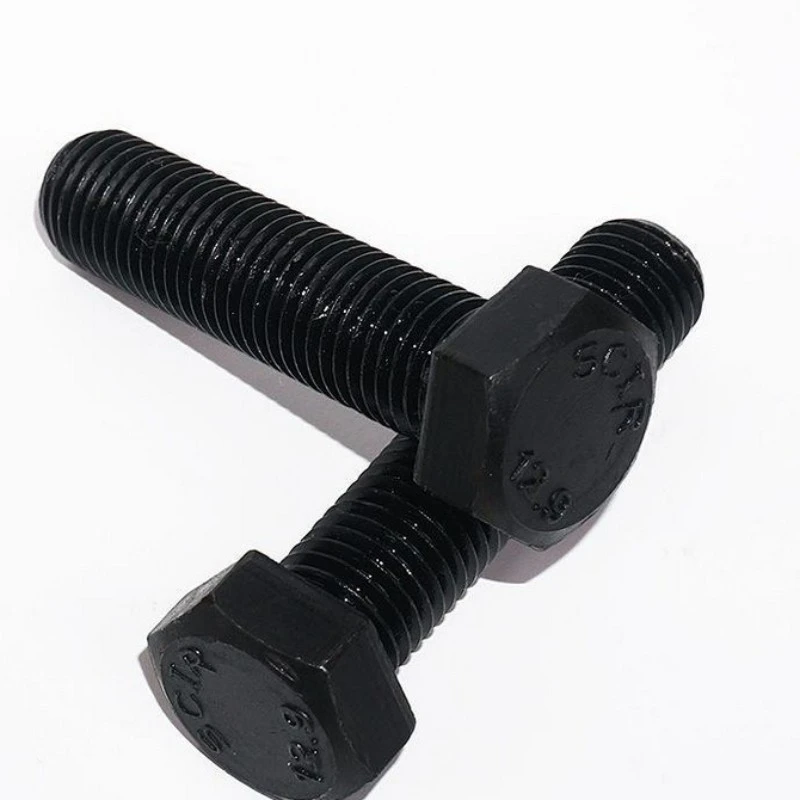
When it comes to industrial applications, the reliability and performance of fastening components are of utmost importance. Among these components, alloy steel stud bolts stand out for their strength and durability. As a trusted supplier of Alloy Steel Stud Bolt, I often receive inquiries about the tensile strength of these essential fasteners. In this blog post, I will delve into the concept of tensile strength, explore the factors that influence the tensile strength of alloy steel stud bolts, and discuss its significance in various applications.
Understanding Tensile Strength
Tensile strength is a fundamental mechanical property that measures the maximum amount of tensile (pulling) stress a material can withstand before it breaks or fails. In the context of alloy steel stud bolts, tensile strength determines the bolt's ability to resist forces that attempt to pull it apart. It is typically expressed in units of force per unit area, such as pounds per square inch (psi) or megapascals (MPa).
To determine the tensile strength of an alloy steel stud bolt, a standardized test is conducted. A sample of the bolt is placed in a testing machine, and a gradually increasing tensile force is applied until the bolt fractures. The maximum force applied during the test is then divided by the original cross-sectional area of the bolt to calculate the tensile strength.
Factors Affecting the Tensile Strength of Alloy Steel Stud Bolts
The tensile strength of alloy steel stud bolts is influenced by several factors, including the chemical composition of the alloy, the heat treatment process, and the manufacturing quality.
Chemical Composition
The chemical composition of the alloy steel plays a crucial role in determining its tensile strength. Alloying elements such as carbon, manganese, chromium, nickel, and molybdenum are added to the steel to enhance its mechanical properties. For example, carbon increases the hardness and strength of the steel, while chromium and nickel improve its corrosion resistance. The precise combination and proportion of these alloying elements can significantly affect the tensile strength of the stud bolt.
Heat Treatment
Heat treatment is another critical factor that affects the tensile strength of alloy steel stud bolts. Through processes such as quenching and tempering, the steel's microstructure can be modified to achieve the desired mechanical properties. Quenching involves rapidly cooling the heated steel in a liquid medium, which hardens the steel but also makes it brittle. Tempering is then performed to reduce the brittleness and improve the toughness of the steel. The specific heat treatment parameters, such as the heating temperature, cooling rate, and tempering time, must be carefully controlled to ensure consistent and optimal tensile strength.
Manufacturing Quality
The manufacturing quality of the stud bolt also has a significant impact on its tensile strength. Factors such as the quality of the raw materials, the precision of the machining process, and the presence of any defects or imperfections can affect the bolt's performance. For example, surface defects, such as cracks or scratches, can act as stress concentrators and reduce the bolt's tensile strength. Therefore, it is essential to ensure that the stud bolts are manufactured to high-quality standards using advanced manufacturing techniques and equipment.
Significance of Tensile Strength in Applications
The tensile strength of alloy steel stud bolts is a critical consideration in various applications, particularly those where high loads and forces are involved. Here are some examples of industries and applications where the tensile strength of stud bolts is of utmost importance:
Construction
In the construction industry, alloy steel stud bolts are used to connect structural components, such as beams, columns, and joints. The tensile strength of these bolts is crucial for ensuring the structural integrity and safety of the building. In high-rise buildings, bridges, and other large-scale structures, the stud bolts must be able to withstand the significant tensile forces exerted by the weight of the structure and external loads, such as wind and seismic forces.
Automotive
In the automotive industry, stud bolts are used in engine components, suspension systems, and other critical parts. The high tensile strength of these bolts is necessary to withstand the extreme forces and vibrations generated by the engine and the vehicle's movement. For example, the cylinder head bolts in an engine must be able to maintain a tight seal under high pressure and temperature conditions to prevent leakage and ensure proper engine performance.
Oil and Gas
In the oil and gas industry, alloy steel stud bolts are used in pipelines, refineries, and offshore platforms. These bolts are subjected to high pressures, corrosive environments, and extreme temperatures. The tensile strength of the stud bolts is essential for ensuring the integrity of the pipelines and equipment and preventing leaks and failures that could have serious environmental and safety consequences.
Types of Alloy Steel Stud Bolts and Their Tensile Strengths
There are several types of alloy steel stud bolts available, each with its own unique tensile strength and properties. Here are some common types of alloy steel stud bolts and their typical tensile strengths:
ASTM A193 Grade B7
ASTM A193 Grade B7 is a widely used alloy steel stud bolt material. It is made of a chromium-molybdenum alloy and has a minimum tensile strength of 125,000 psi (862 MPa). This grade of stud bolt is commonly used in high-temperature and high-pressure applications, such as in power plants and refineries.
ASTM A320 Grade L7
ASTM A320 Grade L7 is a low-temperature alloy steel stud bolt material. It is also made of a chromium-molybdenum alloy and has a minimum tensile strength of 125,000 psi (862 MPa). This grade of stud bolt is designed to maintain its strength and toughness at low temperatures, making it suitable for use in cryogenic applications, such as in liquefied natural gas (LNG) plants.
ASTM A490 Grade B
ASTM A490 Grade B is a high-strength alloy steel stud bolt material. It is made of a nickel-chromium-molybdenum alloy and has a minimum tensile strength of 150,000 psi (1034 MPa). This grade of stud bolt is commonly used in structural applications where high loads and forces are involved, such as in bridges and buildings.
Choosing the Right Alloy Steel Stud Bolt
When selecting an alloy steel stud bolt for a specific application, it is essential to consider the required tensile strength, as well as other factors such as the operating environment, the type of load, and the compatibility with other materials. Here are some tips to help you choose the right stud bolt:
Determine the Required Tensile Strength
Based on the application requirements, determine the minimum tensile strength needed for the stud bolt. Consider factors such as the maximum load or force that the bolt will be subjected to, as well as any safety factors or design requirements.
Consider the Operating Environment
The operating environment can have a significant impact on the performance and durability of the stud bolt. Factors such as temperature, humidity, corrosion, and vibration must be taken into account. For example, in corrosive environments, it is important to choose a stud bolt with good corrosion resistance, such as one made of stainless steel or a corrosion-resistant alloy.
Evaluate the Compatibility with Other Materials
When using stud bolts in a joint or connection, it is important to ensure that they are compatible with the other materials involved. For example, if the stud bolt is being used to connect two different metals, there is a risk of galvanic corrosion. In such cases, it may be necessary to use a coating or a gasket to prevent direct contact between the metals and reduce the risk of corrosion.
Conclusion
The tensile strength of alloy steel stud bolts is a critical property that determines their ability to withstand high loads and forces. By understanding the factors that influence the tensile strength, such as the chemical composition, heat treatment, and manufacturing quality, and by choosing the right stud bolt for the specific application, you can ensure the reliability and performance of your fastening systems.
As a leading supplier of Alloy Steel Stud Bolt, we are committed to providing high-quality stud bolts that meet the strictest industry standards. Our stud bolts are available in a wide range of sizes, grades, and specifications to meet the diverse needs of our customers. Whether you are in the construction, automotive, oil and gas, or any other industry, we have the expertise and experience to help you select the right stud bolt for your application.
If you have any questions or need further information about our alloy steel stud bolts, or if you are interested in discussing a potential procurement, please feel free to contact us. We look forward to working with you to meet your fastening needs.

References
- ASME Boiler and Pressure Vessel Code
- ASTM International Standards
- Machinery's Handbook


