

As a trusted supplier of halfen channels, I often get asked about various technical aspects of these products. One question that comes up quite frequently is: "What is the Young's modulus of a halfen channel?" In this blog post, I'll delve into this topic to provide you with a comprehensive understanding.
Understanding Young's Modulus
Before we specifically talk about the Young's modulus of a halfen channel, let's first understand what Young's modulus is. Young's modulus, also known as the modulus of elasticity, is a fundamental property of a material. It measures the stiffness of a solid material and describes the relationship between stress (force per unit area) and strain (deformation) in the linear elastic region of a material's stress - strain curve.
Mathematically, Young's modulus (E) is defined as the ratio of stress (σ) to strain (ε):
[E=\frac{\sigma}{\varepsilon}]
where stress (\sigma=\frac{F}{A}) (F is the applied force and A is the cross - sectional area), and strain (\varepsilon=\frac{\Delta L}{L_0}) ((\Delta L) is the change in length and (L_0) is the original length). A higher Young's modulus indicates that a material is stiffer and less likely to deform under a given load.
Young's Modulus of Halfen Channels
Halfen channels are typically made of steel. The Young's modulus of steel generally falls within a well - defined range. For most structural steels, the Young's modulus is approximately (200\times10^9) Pa or 200 GPa. This value can vary slightly depending on the specific composition and heat treatment of the steel used in the halfen channel.

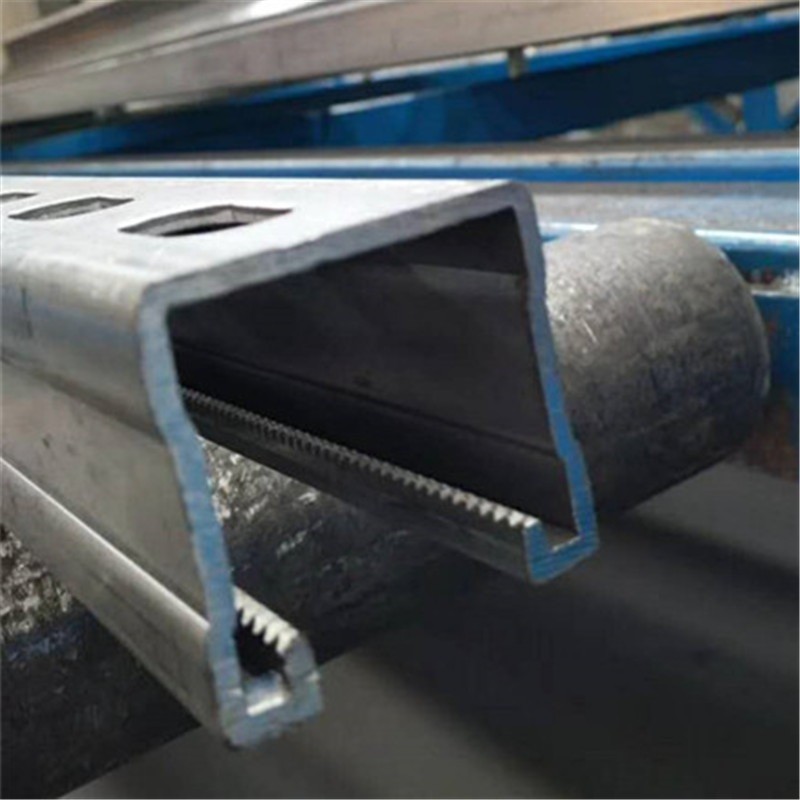
The high Young's modulus of steel makes halfen channels an excellent choice for a wide range of applications. In construction, they are often used to support heavy loads, such as in curtain wall systems, bridge construction, and industrial buildings. The stiffness provided by the high Young's modulus ensures that the halfen channels can maintain their shape and integrity under significant stress, preventing excessive deformation that could compromise the structural stability of the overall system.
Factors Affecting the Effective Young's Modulus in Halfen Channel Applications
While the intrinsic Young's modulus of the steel used in halfen channels is relatively constant, the effective stiffness in a real - world application can be influenced by several factors:
- Geometry of the Channel: The cross - sectional shape and dimensions of the halfen channel play a crucial role. Channels with larger cross - sectional areas or more optimized geometries can distribute loads more effectively, resulting in a more efficient use of the material's stiffness. For example, a deeper and wider channel may be able to resist bending and shear forces better than a shallower and narrower one, even if they are made of the same steel.
- Connection Details: The way halfen channels are connected to other structural elements can affect their overall stiffness. Well - designed connections that ensure proper load transfer can enhance the effective Young's modulus of the system. On the other hand, loose or poorly installed connections may introduce additional flexibility, reducing the overall stiffness.
- Load Type and Distribution: The nature of the applied load, whether it is a static load, dynamic load, or cyclic load, can impact the behavior of the halfen channel. Dynamic loads, such as those caused by wind or seismic activity, may require the channel to have additional stiffness to withstand the rapid changes in force. Uneven load distribution can also lead to localized stress concentrations, which may affect the overall performance of the channel.
Importance of Young's Modulus in Halfen Channel Selection
When selecting a halfen channel for a specific application, understanding the Young's modulus is essential. Engineers and architects need to consider the expected loads and the required level of stiffness to ensure the long - term performance and safety of the structure.
For example, in a high - rise building curtain wall system, the halfen channels need to support the weight of the glass panels and resist wind loads. A channel with a higher effective Young's modulus will be able to maintain its shape and alignment, preventing any sagging or misalignment that could lead to water leakage or aesthetic issues.
In seismic - prone areas, the stiffness provided by the appropriate Young's modulus is crucial for the halfen channels to withstand the ground motions during an earthquake. Hot - dip Seismic Halfen Channel are specifically designed to meet these requirements, with careful consideration of the material's properties and the overall structural design.
Related Products and Their Significance
In addition to the halfen channels themselves, there are related products that are often used in conjunction with them. Halfen Channel Bolts are an important component for connecting the channels to other structural elements. These bolts need to be compatible with the stiffness of the channels to ensure a secure and stable connection. The proper selection of bolts can enhance the overall performance of the halfen channel system.
Electro - galvanised Halfen Tanks are another related product. The electro - galvanized coating provides corrosion resistance, which is important for the long - term durability of the halfen channels, especially in harsh environments. Maintaining the integrity of the channels over time is closely related to their ability to maintain their stiffness, as corrosion can weaken the material and reduce its Young's modulus.
Conclusion and Call to Action
In conclusion, the Young's modulus of a halfen channel, typically around 200 GPa for steel - made channels, is a critical property that determines its stiffness and performance in various applications. Understanding this property and the factors that can affect it is essential for the proper selection and use of halfen channels in construction projects.
Whether you are an engineer, architect, or contractor, choosing the right halfen channel and related products is crucial for the success of your project. As a leading supplier of halfen channels, we are committed to providing high - quality products that meet the most demanding requirements. If you have any questions about our halfen channels, their Young's modulus, or need assistance in selecting the right products for your application, please do not hesitate to contact us for procurement and further discussions.
References
- "Mechanics of Materials" by Ferdinand P. Beer, E. Russell Johnston Jr., John T. DeWolf, and David F. Mazurek.
- "Structural Steel Design" by Jack C. McCormac and Russell H. Gallaghar.
- Manufacturer's technical documentation on halfen channels and related products.


